And I don’t want to internalize my God, make him another part of me, talk to a selfmade idea. So I look up every now and then, away from myself, and ask if he sees me, if I am noticed as I walk under the stars. Not because I don’t know the answer, but because I do.
Tag Archives: thoughts
The shame of having to try
Why are we ashamed of effort? Or is this just me?
I was watching a video where this girl talks about preparing for a preaching. She was going to talk for about 35 minutes at a conference, and she prepared for it a whole year. First just by keeping it in the back of her mind, but later by starting the actual, practical preparation. She felt like she was supposed to talk about the Bible, which is kind of a big topic. So she spent hours researching, looking at different overviews and thinking about ways to put the whole story into her short teaching. She got up extra early, stayed up extra late, and fell asleep while reading. She preached the story for friends and family to get feedback before landing in the final product, the best way to express what she wanted to say.
And all I could think was: That’s a bit embarrassing. I wonder if the other speakers put in that much effort. And if I did that, I wonder if I would tell everyone I did, or if I’d say ”Ahh I just threw it together, it wasn’t that much work.”
It’s a bit of a subconscious thought pattern, but I was wondering why those thoughts do come up. Why do I feel some kind of second hand embarrassment over someone putting effort into something?
If I give someone a gift, I always act as if it’s not a big deal. As if it’s just a second hand thought. To make sure they don’t feel bad. But why, is that not just a bit rude?
And when doing things, I think my brain naturally plans according to me putting the least effort possible into something. “How quickly could I get this done?” I think it’s leftover thoughts from school, back when I needed to schedule homework and study for tests. “Okay, if I write that in three days, spend a week studying for that, and plan for that presentation the night before, I’ll have time for everything”. But it’s become a bad habit. And the problem is that when I’ve started to think like that, it’s difficult to put in more time than what I’ve calculated for something. If I have a task due in a month and know I could do it in three days, it’s not like I’m gonna do it right now.
It’s practical, to be able to evaluate approximately how much time something will take. But I was thinking, when listening to that woman talk about her preaching, that I should also spend a lot more time on things. When I can at least, and I usually can. And I should care more, or rather admit that I care. Always, so much. There are journalists who follow stories for years, painters who spend hours on the smallest little corner of a painting, people who spend weeks preparing for a dinner party that then passes and turns into a memory. I love that.
So, my thought for this new year (kind of new year, I’m not accepting that it’s almost February already) is this: Let’s care more. Let’s put months of preparation into small artworks, or speeches, or moments. Let’s be overly attentive, overly loving, more than trustworthy. Instead of thinking, how can I get this done in the fastest way possible, think: how can I get it done the slowest? What would that look like?
The lack
I’m in a cafe in a city the south of Sweden. They serve specialty coffee, todays special has a citrusy hint to it or something. And they’re surprisingly kind about my big backpack and the suitcase I’m dragging around, letting me take up space in their clean, modern cafe.
I’ve been staying with a friend for a couple of weeks, and I left her place this morning.
Now I’m in the middle of nowhere. People keep calling me and I keep not answering because I don’t want to explain that I have nothing to explain. There is not a lot to my life these days. A lot of things have been taken from me. And it’s fine. But I have nowhere to stay. No job. Less and less money left. No set path for my future. Whenever I want to start something, I feel God uprooting it. I have left a lot of things and not entered a lot yet.
But also, here’s the thing: this evening I’m taking the night train to stockholm. In the morning I’ll head to the airport. And then I’ll fly to Greece. I booked a cheap hostel, and a friend is coming with me. Im going to walk the streets and swim in the oceans and read the letters to the Thessalonians in the actual city of Thessaloniki.
I’ve been in a time of not having a lot. But at the same time I have had, constantly, just enough of everything. The lack is not actually a lack at all. I have had food for every day. A place to rest my head every night. My life will become a bit more stable, and I will like it, and I will be grateful for it, and I will rest. But I also rest here. In the sun shining into this cafe. In Greece, tomorrow. Everywhere. Everyday, is fine.
The dichotomy of it makes me think of one of my favorite poems, We were emergencies by Buddy Wakefield. The last line goes like this:
You call 9 – 1 – 1.
Tell them
I’m having a fantastic time.
On Tension
Life is lived in the tension, and tensions there are many; To take control over your own life, while simultaneously accepting the leadership and sovereignty of God. To in storytelling share and show, while simultaneously hide the necessary parts. Living out your identity while simultaneously seeking it.
I’m workin on moving the center of control into myself, instead of letting circumstances or surroundings design and decide me, but I need to flow like a river in this, sensitive to that small, great (once again: tension) voice telling me to change direction.
You can be strong and centered while still letting the whirlwind of contradictions exist inside of you. For maturity, it’s essential that you are.
Sunday thoughts (5)
Sometimes we make God into what we are. But sometimes, possibly more unaware, we make God into what we’re not. He’s my flaws, areas I lack in, often: logic and reason. I see myself as the romantic one in this relationship. The emotional one. I turn to him with thoughts and ideas, problems and decision. Rarely heart. Rarely in my moods and to hang out a second. Idea: if you have something you need to pray about, pray about it. But if the time you’ll take for that is in a few days, there’s nothing stopping you from hanging out with God now. Just to chill. Just to be with him.
John 5
On the morning of my friends wedding all the other bridesmaids were sitting reading their bibles. I felt slightly bad, but I also did not want to – you know, get up – from the very comfy chair I was sitting in. So I thought instead about John 5 – that I’d been reading the previous day – and I started reiterating it to myself, closing my eyes and reading in my own head.
The story in the beginning of John 5 follows a man that I don’t think gets enough credit. Or at least is used far too often as a warning example instead of a pointer to something relatable and inexplicably human within ourselves. The man in question had been an invalid for 38 years and was laying on the ground close to a pool of water, where every know and then the water was said to be stirred by angels and heal whoever bathed in it. I was going through the lines of the story in my head, and when I said to myself, as the man did to Jesus: “I have no one to help me get to the water,” it hit me square in the chest. (To be honest I looked it up, and that’s not exactly how he says it in any translation, in the NIV for example it says: “Sir,” the invalid replied, “I have no one to help me into the pool when the water is stirred.”) But as I said those words out loud – in my head (so not really out loud), I found myself saying it as if it was me, talking to Jesus out of my own current circumstances. Which leads me to my first point:
- We have no one to lead us to the water. Now, the critique I’ve heard against this verse is that the guy had like 38 years to get to the water. Sure, he couldn’t move much, but even if he would have moved just one inch a day, I’m fairly certain that in 13 879 days he would have gotten there. I heard a preaching about this once – about just moving a little bit every day. You don’t want to find yourself 20 years into the future with the same problem you’re carrying today. It was by all means a great preaching, but here’s the thing: I have no one to help me to the water. That is how I feel, in the midst of my sin and worry. Sure, maybe I’m constantly growing and moving, but in the end, when it all comes down to it, I am that man waiting for someone to help me to the place of healing I am incapable of reaching myself.
- Now here’s what complicates this: Was he actually incapable of reaching it? As said in the previous point: he could have reached it himself. He could have moved. So why shouldn’t we? My previous point doesn’t seem valid, because how can we ask God for help with something we should just be able to do ourselves? But this, I think, is what strengthens this example, rather than weakening it, and is a better than many other example of a broken world. Because there’s no one directly stopping you from doing what is right. There’s influence, but there’s no one standing there forcing your hand to choose what’s bad. No human except for Jesus has ever been able to live life without choosing sin, but each and every one had the free will to do so. Each and every one was able to live only being good, but also no one was able to. We can’t make our way to the water, not because we technically can’t, but because we don’t. This is the great mystery of our inability to not sin: The fact that we technically can not sin. I know, I don’t get it either. But if the man in the story had all the excuses, was completely bound to the ground, could never have fought for freedom himself, this would not be as good of an example for us. We find ourselves where the man is, broken, on the ground. Capable of moving, but never quite capable of reaching.
- This weakness is the key. Our inability to get there. I have heard people point out (once again, in very great preachings), that the man never answered the question Jesus asked. Jesus asks him: “Do you want to be healed?” and that’s when he just answers that he can’t get to the water. But honestly, that’s the most natural response. For him, the water is the place where the healing takes place. And this is actually the real point, scratch everything that’s been said until now. Scratch your failed attempts at reaching whatever source or path you think will take you to healing, will take you to a place of redemption; Jesus was standing right next to him. He was looking at the water, and Jesus was looking at him. And we stand, like this, next to the saviour of the universe, and we ask him how we can climb a mountain he has come down from to meet us. It is okay that you can’t. It is okay that you can not climb the mountain of God (every culture has tried), that you can’t reach the place of healing and purity and perfection, because he has come to meet you now, and to your inability to get to the water he answers a simple: Get up. Grab your bed and walk. Not towards healing, but in the healing you have already received.
Motivation
I’ve always been more motivated by what I don’t want than by what I do want.
This fear has served me well. It has sent me out of the ordinary, out of where I don’t want to be. I think about the Twenty pilots song Leave the city that admits to not knowing where you’ll end up, or Brené Browns book Braving the wilderness, about leaving our clearly pronounced structures and stern belief systems.
And it reminds me of what a lot of people seem to be going through at the moment, or have been going through for a while. Churches, ministries, or just people. We know we’re not exactly where we should be, and so we lay things down, move out, take the first step in trust even if we don’t know where we’ll end up. The wilderness, or trench, as Twenty One Pilots call it, is scary, because it’s where we don’t have all the answers. And now we’re out here, not knowing the answers.
It’s made me to think about my competitiveness. If you’ll stay with me for a moment:
I’m extremely competitive. Always have been. But it’s much more important to me to not lose, than it is to win. It’s bad, I think. People motivated by winning and succeeding will do anything for it, they’re fighters and victors. But for me: if there’s a chance I’ll lose I might not even want to try in the first place.
This is obvious in other parts of my life as well. I’m very motivated by what I don’t want. What kind of life I don’t want, what I don’t want to do, who I don’t want to be. The most motivating sentence to me has always been: “But what if I’m not?” in response to “What if I’m too scared to do all the things I’ve ever wanted.” My point: I am fully aware of what I’m moving away from.
Too aware.
Truth is, anyone can be a rebel. And our courage has served us well. So has our eagerness to obey God, to move out into uncertainty. But I’ve been out in the wilderness for a while now, and the problem with it not being a place for answers is that there still seems to be no answers. And so what I’ve decided is this: There comes a moment, out in the dust – with that city looming in the background – when we have to stop looking back at what we left and turn our heads to where we want to go.
It is time to stop being motivated by what we don’t want and start being motivated by what we do want. If it hasn’t yet, the looking back, the awareness of what you don’t want, will make you desperate. What takes actual maturity is to look forward. To make a choice and move towards it. To be brave enough for what you want, even if you think you don’t know (Which, you do, you actually do, otherwise you wouldn’t have left that other place behind. It might just not be in the shape you think a dream should be.) Grow up, look forward. Maybe it’s a mirage, that city you see in the distance, I can’t promise that it’s not. There’s no way to see from this distance.
But I know you’ll never know if you don’t start moving towards it.
Direction
Yesterday I was walking home through the sunset and I was thinking about how in philosophy, both everything is movement and movement cannot logically exist. That everything is movement makes sense, all atoms are vibrating and spinning and twisting, otherwise we’d fall apart. It’s a solar system in miniature, it couldn’t stand still. But the thought that there’s no such thing as movement, that makes sense as well. The classic example that some old greek dude whose name I’ve forgotten spoke about is of an arrow flying through the air. If you would observe that arrow at any point in time it would be still in the middle of the air. Another moment, it would be still at some other point in its path. But if at any given point it is not moving, how then can it be moving at all?
I’ve been thinking about that because I’m curious about how it’s supposed to work in our own life. Are we supposed to run or stand still? Is everything movement and direction, or do we live better by being empty somehow, content.
There’s argument to be made for both. But I do know that we’re not good at being directionless (and direction must be a form of movement, or at least an indicator of it). You feel it when you have too much time, walking in slight circles, don’t know what to do when you put your phone down. Your direction is off, you’re not exactly sure what you’re pointing towards. That’s dangerous, makes you feel lost.
So about arrows and philosophy or whatever, I side with movement rather being everything. We can not live if we’re not aimed at something, can’t breathe if we don’t have a moment to move into. But then I think it can also be paired with stillness. Actually, what it is maybe – I think I’ve got it now – is this: Movement is a necessity for stillness.
The cure to restlessness is sitting still and letting your mind flow towards something. And it’s not what my prayers sometimes become, an oops-I-thought-about-that-instead, need-to-think-about-God, but it’s the freedom of believing that our hearts are created and redeemed to be aimed at Him. Sometimes you need to control your mind, but sometimes you need to let go of the reigns and believe that when you allow silence, your spirit will know direction.
First
Completely random thought from the other day:
There’s never been a generation more aware of their own sin. They might not categorize it as such, and they might try to cover it up – or cure it – with some twisted form of self acceptance. But don’t underestimate how much the world knows its judgement. And how much it acts in compensation for that.
(And of course let’s not skirt around the edges of chains, but let’s focus on how they fall.)
Sunday thoughts (2)
(From a weekend away with my church. We do this every autumn, go somewhere and fill the days with get-to-know-each-other-games and bible studies. When I was a kid it was the biggest event of the year, sharing a room with friends and staying up til midnight. It’s different now, not bad though. This year I had deep conversations with the adults. I’m in between categories.)

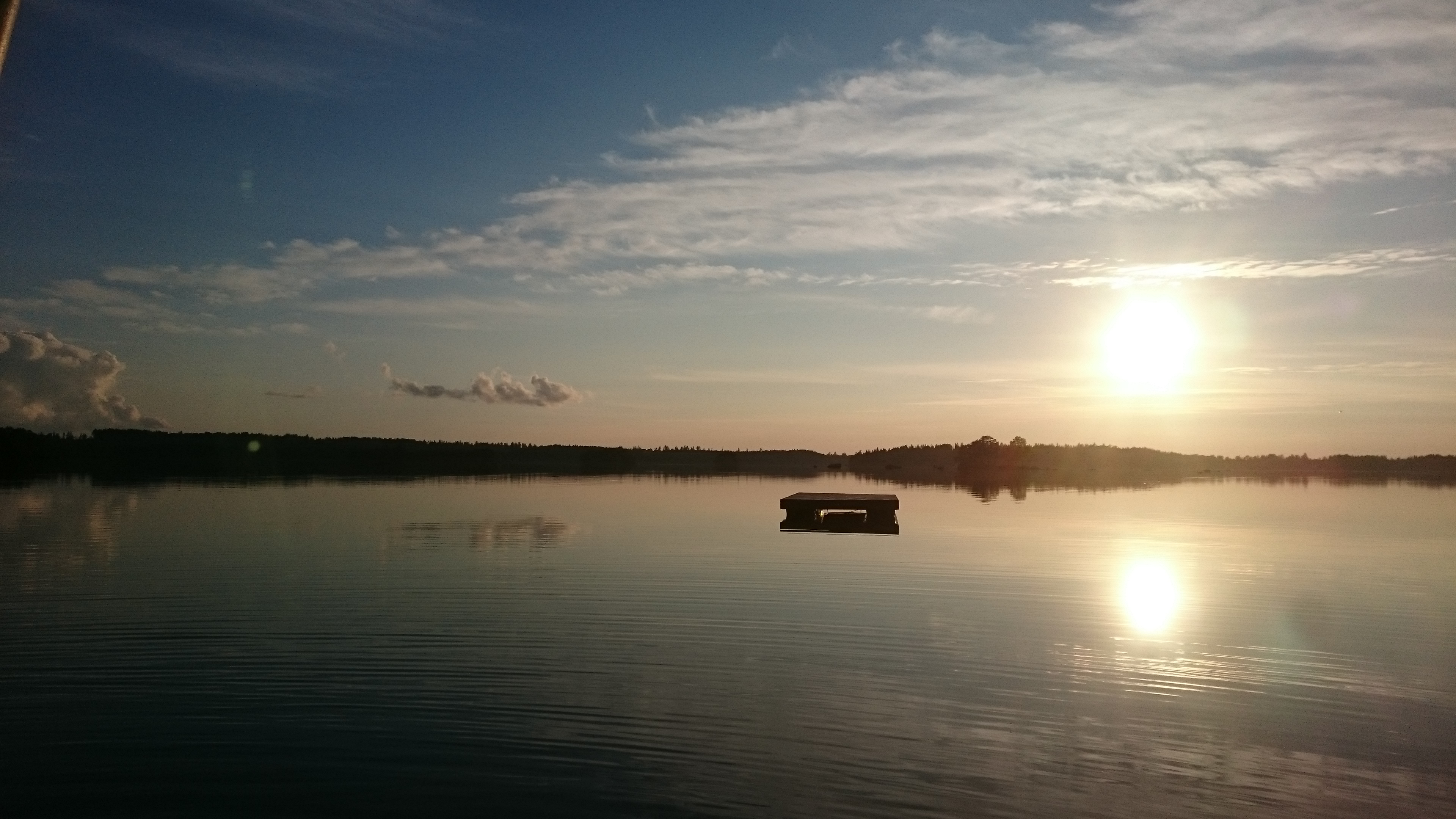
Anyway, thought of the week:
Maybe your weakness is revealed not so you can finally get out of it, but so that you can be in it. Stay in the place of desperation. Find yourself in humility.
 eirians