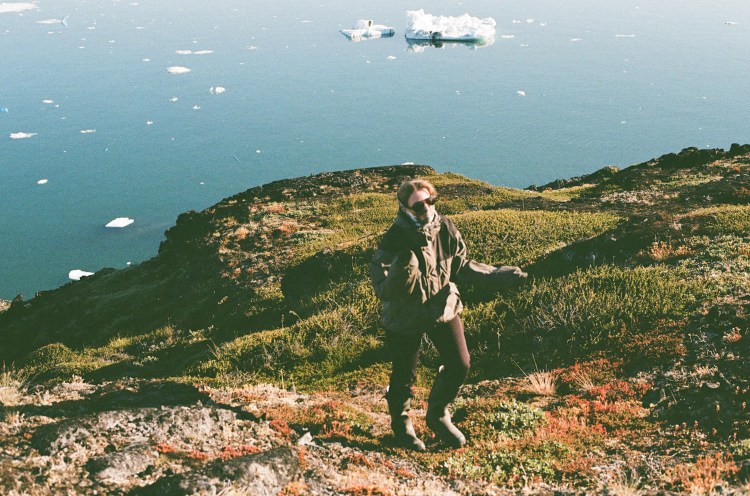
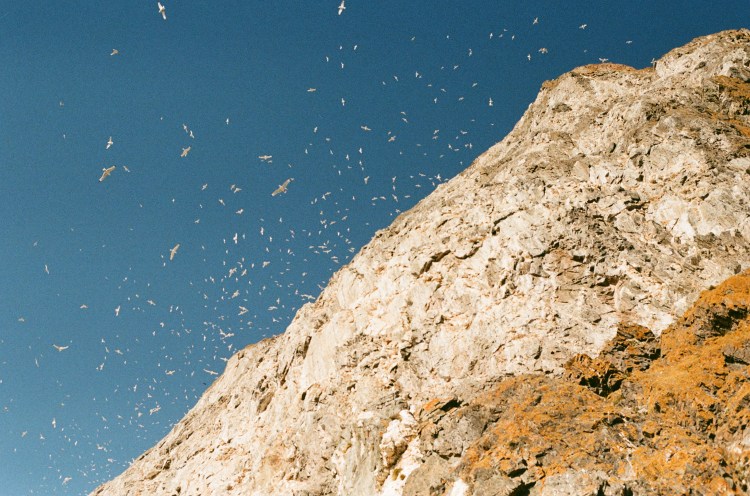
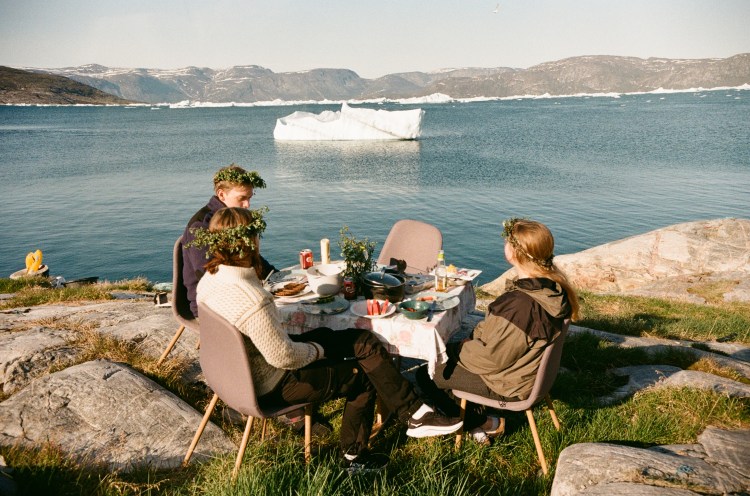
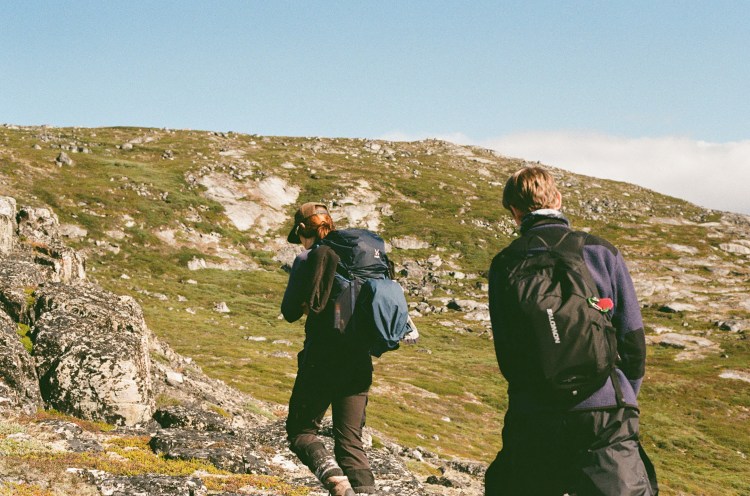
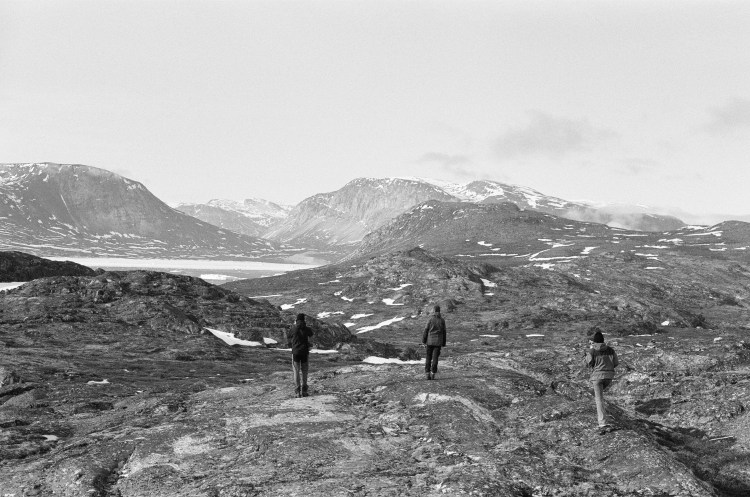
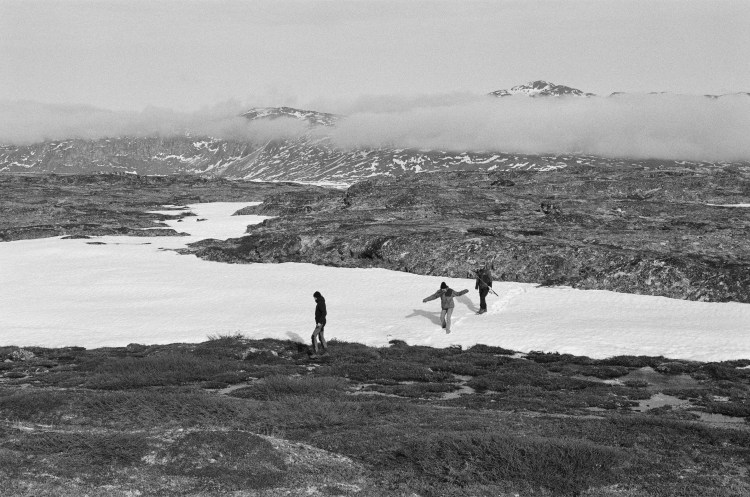
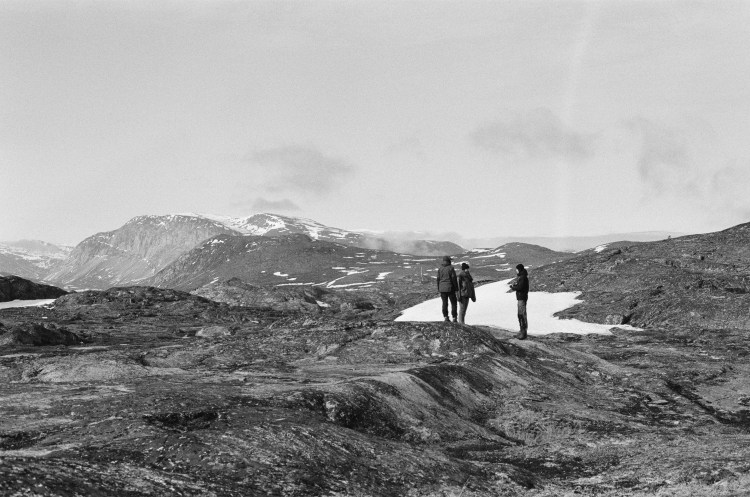
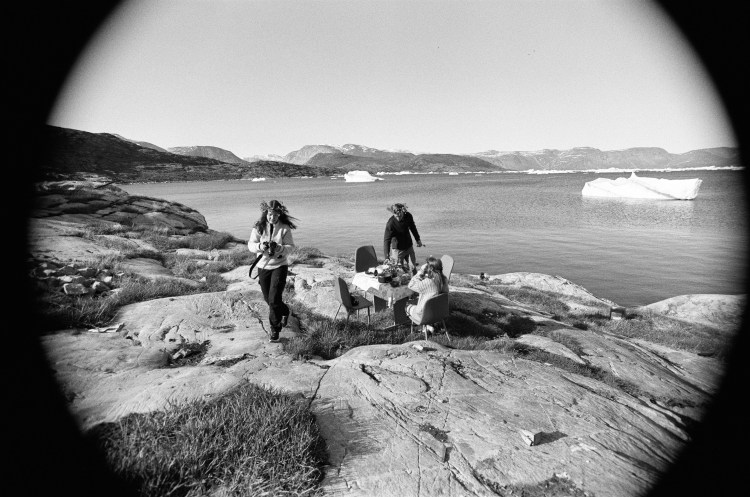
or, after my journalism degree I went to work in a fishing factory in Greenland

I was gone all of last summer. 

I kept telling people I accidentally got a job in Greenland, which is not fully true. I got a job in Greenland because I applied for a job in Greenland. I applied for a journalism job too, but I accepted the one in Greenland before I heard back. Good. I didn’t get the other job anyway.

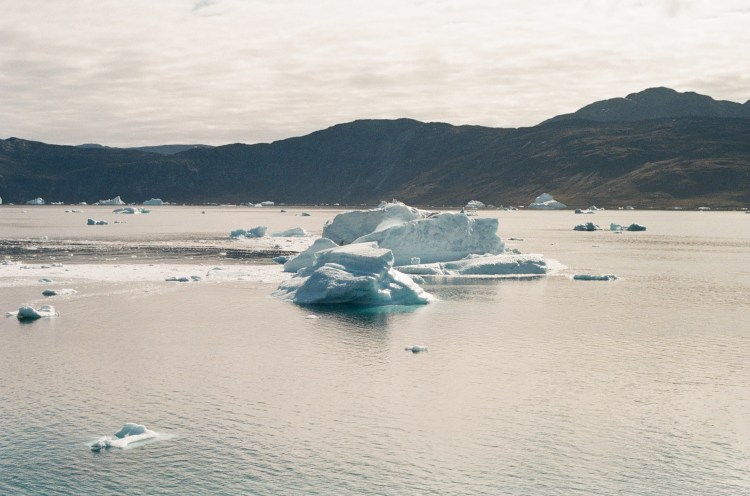
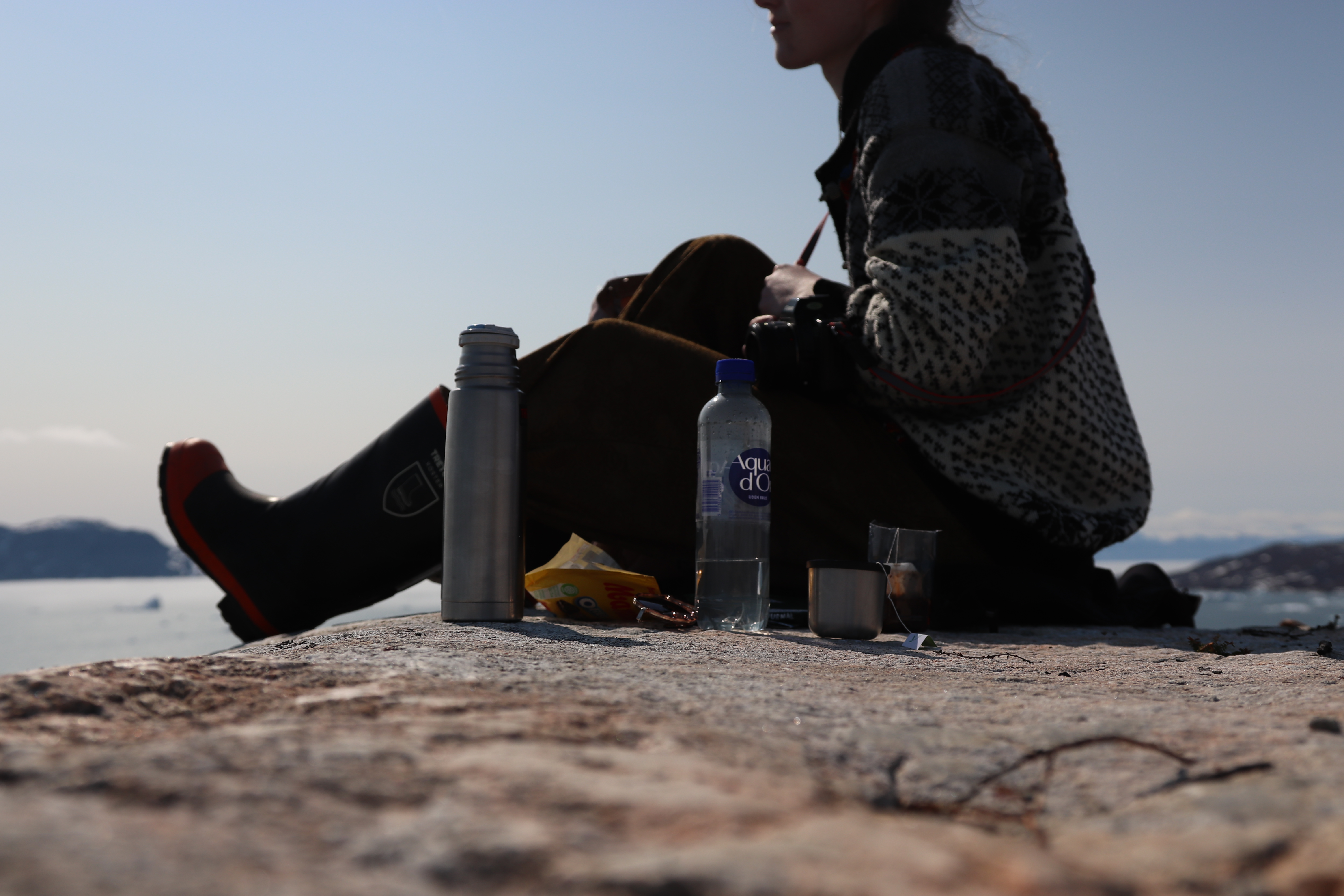
I think about it, sometimes, on a mountain top close to the house where I’m staying, in the small village in the north of Greenland. I walk up the cliffs in the evenings and think there as the sun doesn’t set. People ask me sometimes, about journalism. Would you not want the kind of job your degree suggests? Maybe. It’s not like it’s entirely self chosen, you know, to not have an amazing journalist job.

But also, I would be less of a journalist if I was one.

Maybe, if I worked my way to the top, I could be allowed to go on a reporting trip to a village like this.

But even then I would be outside the walls, not inside. Now I eat breakfast with my colleagues and learn how to say salt, and eggs, and cheese in greenlandic. One of my colleagues wears a red jacket and a pink children’s backpack, she has a pixie cut and smokes outside the factory doors. She handles the deliveries from the fishermen, drives the boxes up the 20 meters from the harbor. When she’s inside she always keeps an eye on the ocean. Another one of my colleagues talks and sings the loudest, but she gets quiet when one specific person walks into the factory. I’ve heard about the young man who drowned not too long ago. I’ve been in the house of the man who has a whole shelf of dogsledding race medals. I ate whale intestines and raw halibut at someone’s birthday party.

I’d rather be a worker here than any other kind of visitor.

For me, the whole career thing becomes so disconnected from what I want. It’s just about how I want other people to see me. And maybe, mainly, I wish I had the choice. I wish I was offered all the prestigious jobs in the world and turned them down just to be here, even if the result would be no different than being here now. It’s not as much about desire as it is about pride.
I don’t have a good way to sum up this text, because I don’t think I’ve let go of the pride. But I do remember a time before it. A few years ago, before my studies taught me what to want and who to impress, I wanted to study journalism just to incorporate the skills and ethics into things I already liked doing. I’ve absorbed much pride since, absorbed it like a poison that now starts to spread though me. But I do remember a time before it.

All the Directions

There’s an insecurity in me that this blog heals. Heals, because I have to finish things here. I have to publish them. I have to be done. I have to decide on an ending and go with it.

I tend to use several words when I write, trying, searching, looking for whatever is the right one. There’s no right one. I’m just scared to settle on one. I want to avoid clarity, so I write everything as if I’m not looking at it.  

The effort, and the not

I wonder how much is the effort and how much is the flow. I can’t paint if I think about selling paintings. The pressure destroys the creativity. But I also can’t create if I never feel any pressure. Right? Or is that untrue? If I organize everything else around me to be good, if I’m healthy, happy, would I create without putting the pressure on the creative process itself?

(Is the trying necessary, or would it flow out of me like water if I stopped?)

Sunday Thoughts (15)

It’s reached the point of winter when the light reaches a bit further. Rises. It’s bright for longer, reflected on the snow.

And I was sitting in my room the other day, listening to a preaching about how important it is to let the light in.

The preacher was talking about how we design conference rooms with thick walls and doors, so that noise can’t get in or out, and we can have certain conversations in private. And sometimes we do the same in our brains. We have some things in our lives that we have built up walls around. Maybe it’s something shameful or secret, or just something in general that we feel like we have to deal with by ourselves. And by keeping those walls up, we can let God change us, and be in our lives, while some parts still remain unchanged. There are some parts where the light doesn’t reach.

But of course, that is not true. There’s no place where the light doesn’t reach. There’s no corner God doesn’t see. In the winter, when the sun is low, it actually reaches further, pierces the eyes. We’re allowed to live in the light, and we need to change our mindset and know that we are. We are whole people, and God deals with all of us.

Notes from Here, from Home

January. The bright, white cold. Minty enough that I feel it in my teeth. I sleep on my loft, right under the angle of the beams, where the heat has risen to. 

Climbing down the ladder feels like dipping your feet in ice cold water. Like a summer lake that’s only warm on the surface. I stand up straight and stretch my hands back up and feel it in my fingers, the heat that’s risen and left the floor boards cold.

I’ve been enjoying running. When I come home I’m overheating and warm to the bones, and I can sit out on the porch as I cool down. I get about ten minutes to look at the stars before I start shivering.

The Exhibition

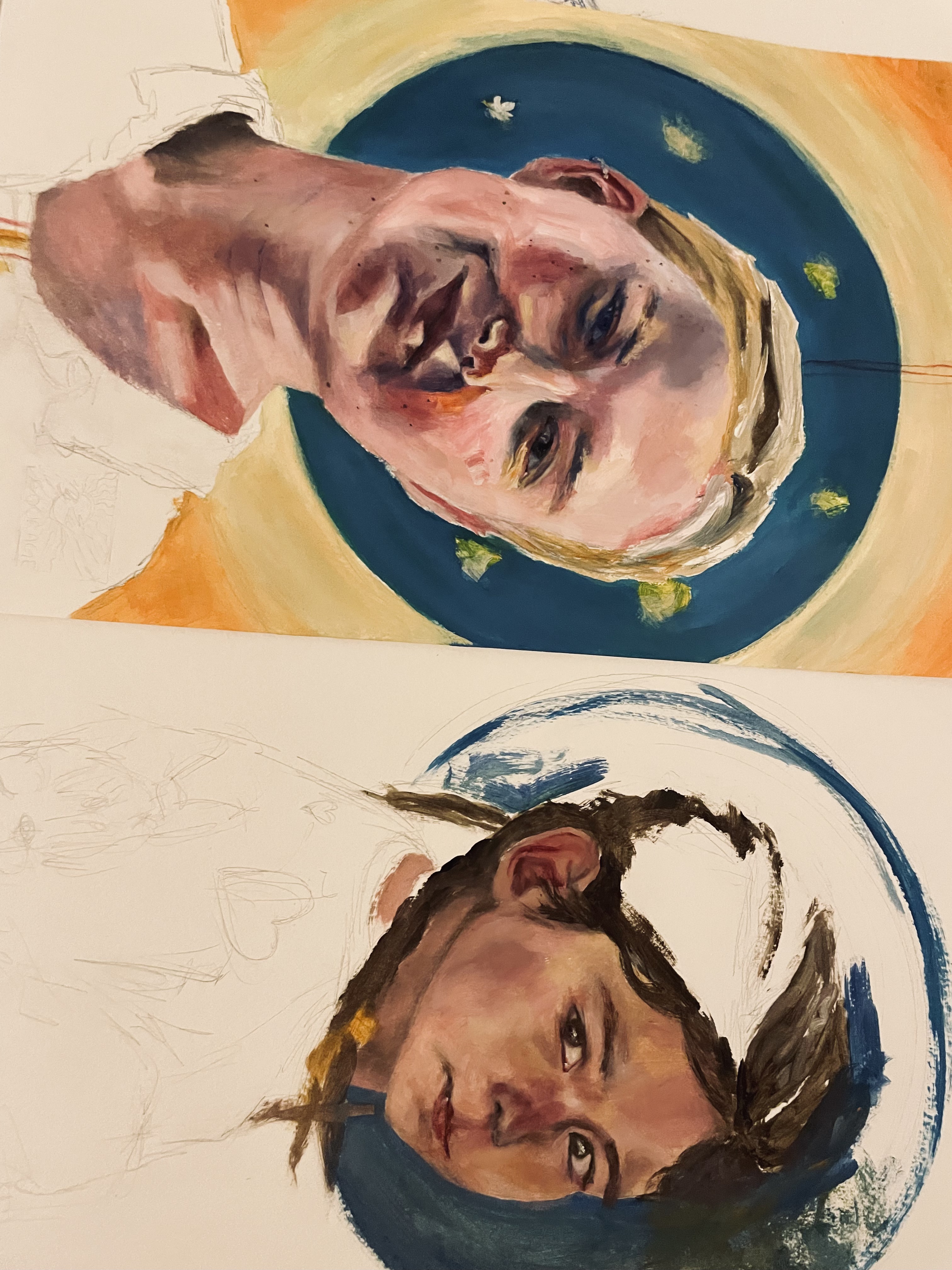
I spent some days out on the streets of Stockholm this fall, photographing people and asking them questions. It turned into an exhibition. Me and my friend hung our art in a bookstore in the city, run by people we know. I never really wrote about it here, so well. Now I am.

When I say that it turned into an exhibition, it’s not quite true. We had an exhibition date set quite early, and I had no art. I had to make something. And I didn’t want to bring a random collection of my paintings, without any coherent theme. So I made something in response to the art my friend was going to show.

She’d been painting florals on taped together bible pages. On the theme of what’s brittle, and what’s eternal. Inspired by the book of Isaiah:
“A voice says, “Cry out.”
And I said, “What shall I cry?”
“All people are like grass,
and all their faithfulness is like the flowers of the field..”

It’s about what’s futile, but also about what’s important. So I thought, what words matter? Out of all the things we say, what lasts? I photographed people on the street and asked them:

“What’s the most important thing you’ve ever said?”

Here are a couple of answers.


I love you. When I say it to my wife and my kids. It’s not so often that I say it. I’m trying to think when was the first time… probably when she was my wife to be. When I knew that it was her. With the kids it’s different, I probably haven’t said it as often.”

The more he talked, the more he seemed to get into a bit of a crisis about whether he actually had said I love you to his kids. It was a bit funny. Maybe he went home and told them. He was great to talk to, and so good to photograph, look at that side profile.


Get lost.”

This woman knew exactly what she was going to answer. Usually people are a bit overwhelmed, the most important thing you’ve ever said, it’s a big question. But not this woman. She was nodding and had an answer ready before I even finished talking. “Get lost. That’s the most important thing,” she said.
I asked something more about it, what made her say it. She said that it was to someone who made her life miserable. That it was survival instinct. She spoke about it very bluntly, in short, confident sentences. There’s something in her posture too, I think. You can see that she knew her answer. Back straight.


I wrote everyone’s answer on the back of their portraits, and hung them in the middle of the room, so that people could walk around and read.

(And now you’ve seen some of it, so you’ve basically been to our exhibition, virtually, yey!)

The most important thing I’ve learned

You have to stop being disappointed in yourself.

I’m not talking about the conscious effort to deny the specific feeling. No, you have to stop actually disappointing yourself. And it’s not as difficult as you might think.

If you constantly try to clean more but never do, I’m not talking about stopping the disappointment you feel about your inability to do so. If you always say you’re gonna work out more but never actually follow through, I don’t care much about having more grace for yourself, although that might also be a thing.

What I’m talking about is to stop expecting certain things from yourself.

That might seem like a gloomy outlook to have for the rest of your life. But here’s the thing: I don’t know how many times I’ve thought “tomorrow I’m gonna get up early and be productive” and then failed to do so. Probably a hundred times. Several hundred. And that might seem stupid. It makes me feel stupid, that’s for sure. But what’s actually stupid is not that I’m constantly failing, but the fact that I keep thinking I’ll succeed.

Why do I do that to myself? When I know what works for me, why do I keep expecting myself to tomorrow be able to get up early and be super productive and happy and full of magical will power? Extending grace is good, truly, it’s unnecessary to feel shame over your inability. But if you want to take it one step further, you can also stop putting yourself in situations where you constantly need to dig yourself out of disappointment.

You’re allowed to be unable. I see it kind of like this: Have you ever played the sims? Sims 4 is my favorite, great game, you design your little character, and their house, and let them live their life. Or rather, you control their life.

If your sims character is unhappy, there are certain things you can do about it. You can put a nice painting on the wall, for example. When they walk past it a couple of green pluses will appear above their head, and their mood will rise (unless their character actually hates art or something like that, it is a little bit unpredictable). There are other actions you can take as well, but the point is that none of them is to tell your sim to be happy. There’s no command like that.

I like to think of my life a little bit the same way. As if I’m a video game character, that I have to put certain things around to affect a certain way. It’s like putting up walls to make a corridor, so the character will head towards the right things.

How do you build the corridor?

To make myself act productively in the morning, I need to leave the house. I need to work somewhere else, preferably a cafe. It’s nice if I meet someone there, but I’ve realized it’s actually not necessary. What I need is a specific bus or train to catch. I’ll probably get up as late as possible to still make it. But that’s okay. I’m not one for long, slow morning routines anyway. I usually can’t enjoy them even if I perform them. They’re aesthetically tempting, but I don’t like being in them. I just need to get out.

Now, gun to my head, could I get up early without that? Of course, I’m physically able to get up at any point. But I won’t. And what you can do in life really doesn’t matter half as much as what you will do.

When it comes to working out, apparently I need some kind of carrot. I skied a well know Swedish skiing race last year, and suddenly found myself training like never before. I continued, but only because I want to improve my time this year. I always thought that was toxic, to measure pace when you run or move. But I’m a competitive person. I love the measuring, apparently.

When you feel the heavy weight of something that you could, and probably should do, it’s good to ask yourself, but will I? And if you actually know you won’t, either accept that you’re not going to. And that’s fine. Or mercifully design the world around you to make sure you will. Whether that’s by seeking accountability or lowering the difficulty level or preparing and rewarding better. Find a way around the obstacle rather than constantly thinking your tomorrow self will have the will power to jump over it.

You don’t always have to grow and change. This is not about things that are inherently, morally wrong, but it’s about things that you can accept, and then adapt to instead of trying to prove some point, to no one. It’s like alcoholism, you don’t always reach a point where you can go back to something. These kinds of boundaries are not support for the weak, that should be taken away as quickly as possible, but part of what it is to build a life. And it is character, as much as willpower is, to see yourself clearly.